My oral history and audio work documents queer and trans social worlds through collaborative interviewing, archival research, exhibitions, documentary media, and public humanities. Across my work, I approach oral history not only as a research method but as a public practice: a way of intervening in cultural debates and creating forms of shared historical interpretation.
I have also led and coordinated community-based oral history projects documenting Black liberation movements and grassroots trans activism in Baltimore, progressive street ministries in San Francisco, and the experiences of elementary-school-age youth in Brooklyn. My audio work has appeared on NPR, San Francisco’s KALW, and in OUT/LOOK Magazine.

Kids on the Street, winner of the 2024 Oral History Association Book Award
“Plaster’s work and the involvement of several participants demonstrate that storytelling can be a valuable tool for knowledge and future acts of resistance. …Kids on the Street is not only a valuable tool for researchers but also relevant material for broader audiences…The book demonstrates how storytelling as a method can inform well-rounded analysis of social interactions and the intersection of sexuality and politics.”
—Mario Guevara, Oral History Review
“This book is a must read. I love [Plaster’s] deep involvement with his narrators and his beautiful writing: this is the only academic text that literally brought me to tears….It’s so impressive to see such a rich work emerge out of the decades-long praxis of doing public history and oral history.”
—Elspeth H. Brown, University of Toronto, LGBTQ Oral History Digital Collaboratory
“In order to conduct his research, Plaster emphasizes, he had to become part of the networks of reciprocity that he describes. At times, Plaster began his research as a consumer, turning drinks at bars or nights with tricks into connections for oral histories. At other times, he was a volunteer serving meals, or an organizer who leveraged connections to the wealthier parts of queer San Francisco for funds that encouraged street kids to participate in his project. Plaster depicts these multiple roles as part of the trust-building necessary to get sources to speak with him. His frankness about the role of money in making this project possible is provocative, and it deserves to be included in graduate public history classes. It will enrich discussions about reciprocity in oral history, the nonprofitization of activism, and the ethics of community engagement.”
—Nora Kassner, The Public Historian
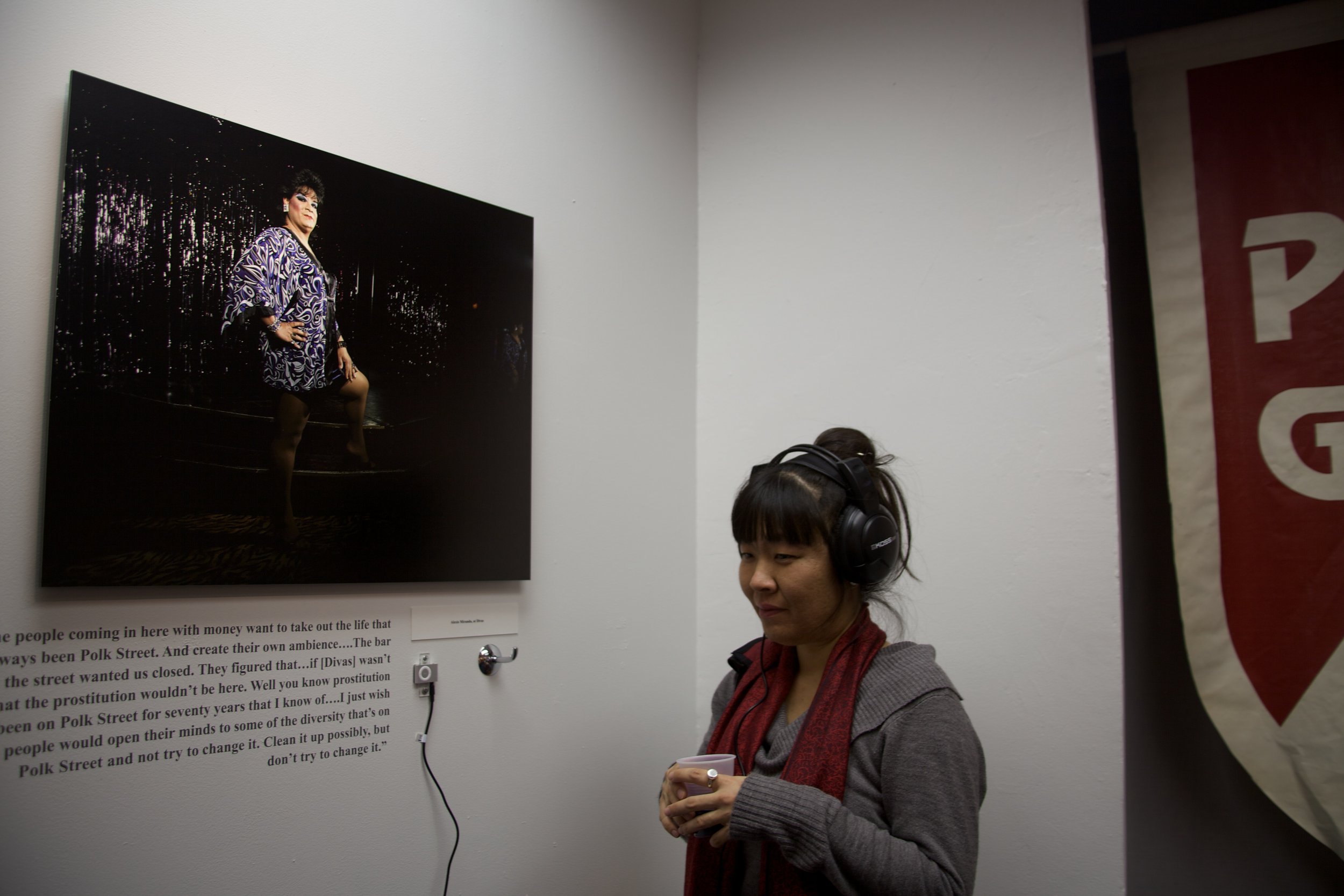
Polk Street: Lives in Transition
From 2008-2010, I directed “Polk Street: Lives in Transition”—winner of the American Historical Association’s Allan Bérubé Prize for outstanding work in public LGBTQ history—based on more than seventy original oral histories with working-class queer and trans people experiencing gentrification in San Francisco’s Tenderloin district. My narrators and I collaboratively challenged gentrifiers’ claims to be promoting “safety” and “family” by circulating alternative understandings of both concepts—alternatives drawn from our oral history recordings—through listening parties, multimedia exhibitions, mediated dialogues, and radio documentaries.
As part of this project, I produced an hour-long radio documentary distributed nationally via NPR’s HearingVoices, Jun. 21, 2010. The documentary was adapted for the stage and produced by Georgetown University’s Mask and Bauble Dramatic Society in 2013.

San Francisco ACT UP Oral History Project
This project chronicled San Francisco’s AIDS direct-action movement through oral histories with ACT UP veterans while training young adult volunteers in collaboration with the GLBT Historical Society. Its intervention was to make oral history an intergenerational activist practice, transmitting tactical memory from AIDS-era organizers to younger queer communities.
Read more about the project here.
Trans Histories Lab / Vintage T
A non-extractive, community-based trans history initiative in which Baltimore-based trans organizers, students, and curators recorded, archived, and interpreted oral histories with trans elders. Methodologically, it shifts authority toward grassroots trans collaborators through workshops, co-teaching, community-designed interview practices, and archival stewardship.
The Histories Lab, composed of organizers, artists, students, and curators, was committed to collaborative knowledge production and transformative justice within and beyond the academy.
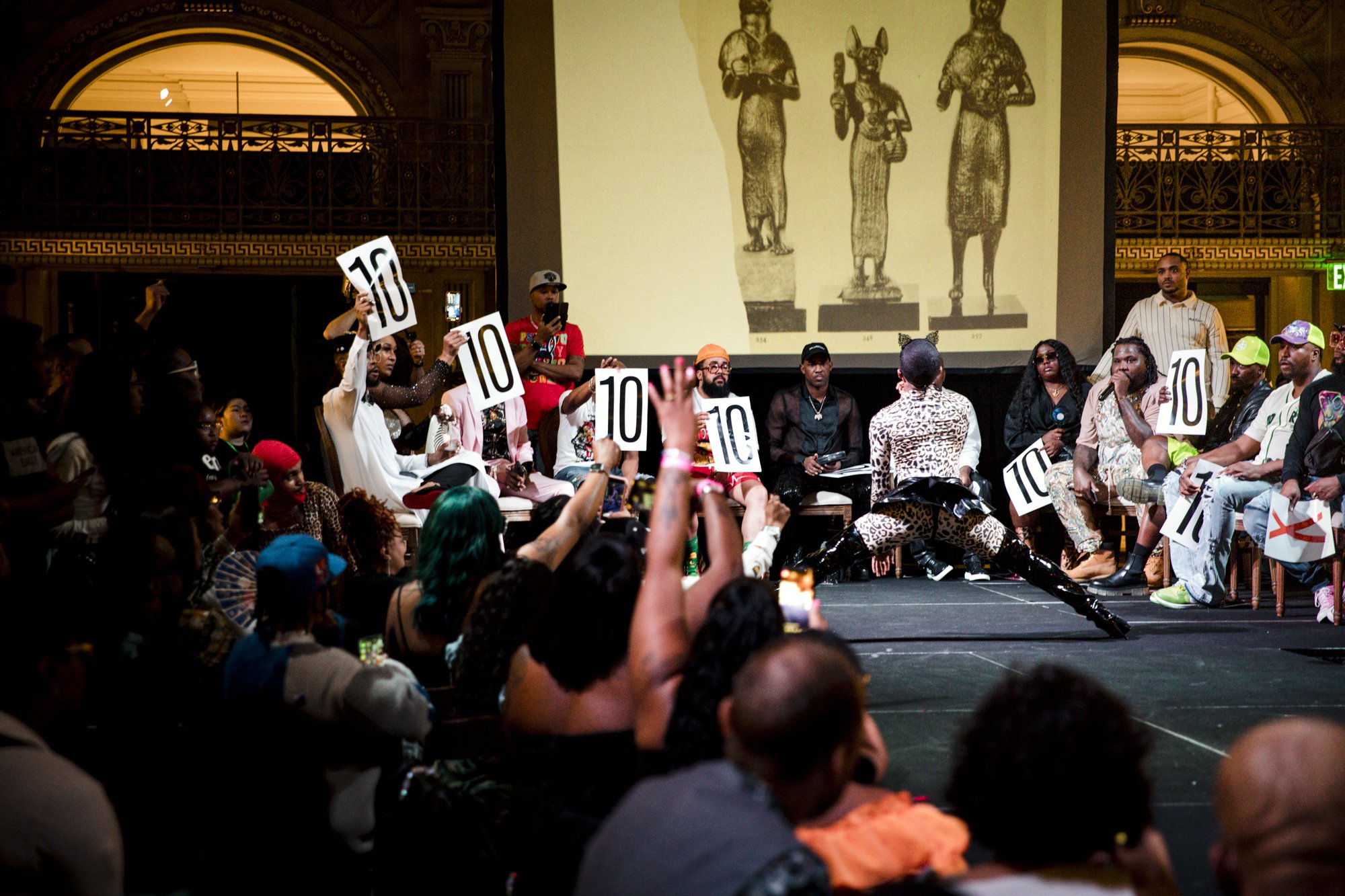
Peabody Ballroom Experience
Embeds oral history within a larger collaboration with Baltimore ballroom artists, combining recorded life stories, audio portraits, ephemera, teaching, dance workshops, film, and ball competitions. Its methodological intervention is to treat performance itself as a repository of historical knowledge, with oral history feeding back into live creative and community practice.
As project coordinator, and as a white, queer university affiliate, I strive to make resources available to people not affiliated with the university, to mediate between publics with radically different access to institutional power, and to advocate for the value of knowledge produced through minoritized publics and practices, particularly through performance.
In June 2023, Baltimore Histories published a three-part series analyzing the oral history collection. Part one explores coming of age experiences and the concept of “moments.” Part two emphasizes the planning for the inaugural Peabody Ball, the history of titles, and Baltimore’s status as an “underdog city.” Part three focuses on three ballroom figures affiliated with the House of Revlon and two student collaborators enrolled in the Peabody BFA Dance program.
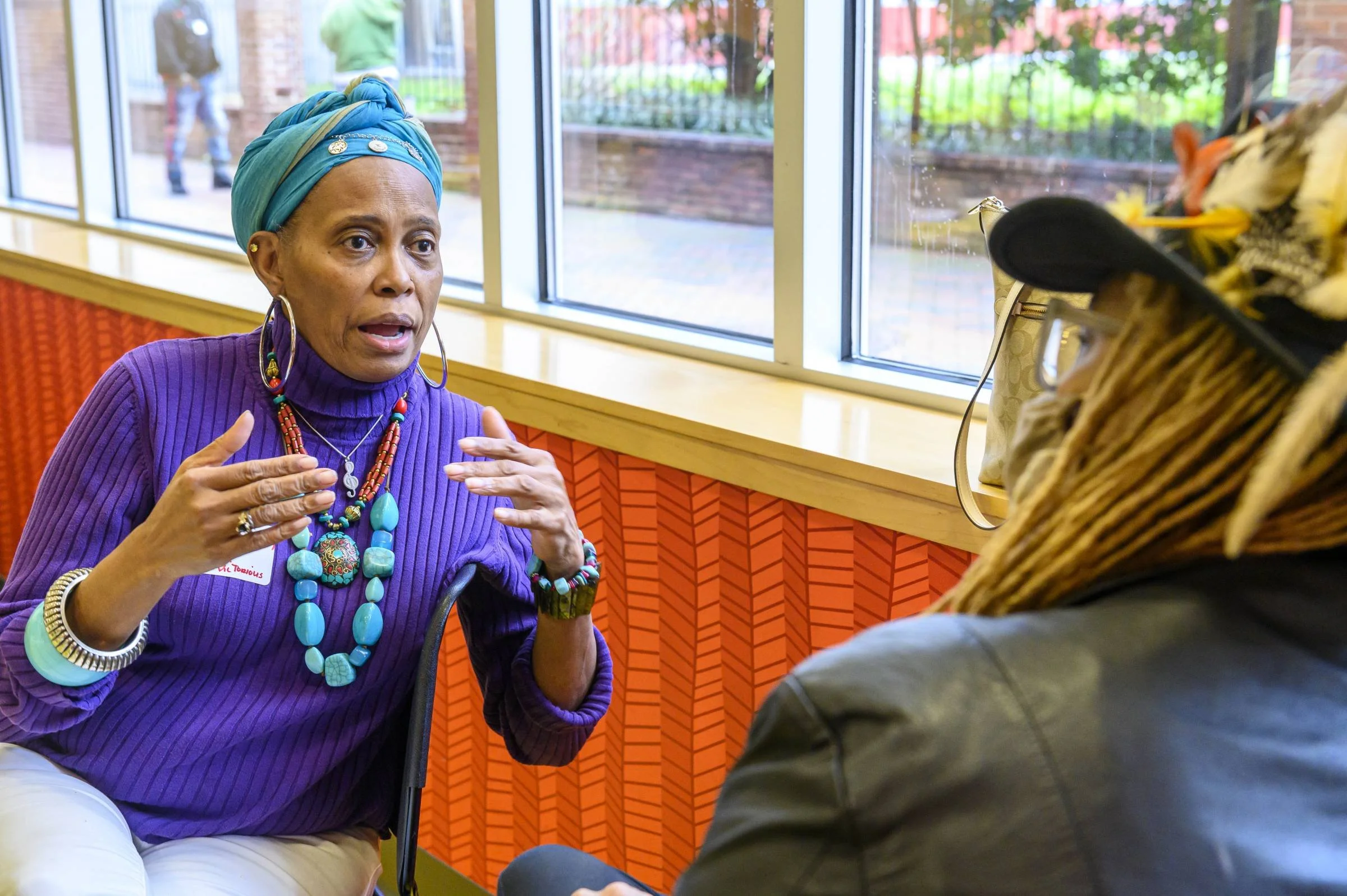
Arts Education for Black Liberation
I was as a faculty member of “Inheritance Baltimore: Humanities and Arts Education for Black Liberation,” a four-year project that used humanities and arts education to transform the relationship between Johns Hopkins and Black Baltimore. By valuing the multiple forms of knowledge and expertise produced by Black Baltimore, the project created durable infrastructure to preserve and transmit historical legacies and communal properties to future generations.
I collaborated with local racial justice organizations in 2022 to organize “Doing Oral History in Baltimore,” three workshops designed to support individuals and institutions in recording, archiving, and interpreting histories in Baltimore, with a focus on the city’s Black histories.
“Joseph Plaster…says that the oral history planning group enlists fellow Baltimoreans as partners in research, rather than objects of study. Through these partnerships with the community, Plaster says he is hopeful that Inheritance Baltimore can provide residents with the tools they need to preserve unrecorded stories, and that the group can learn from the workshop participants.”
—Jamie Crow, JHU HUB
Baltimore Queer Oral History Collection
The Baltimore Queer Oral History Collection documents queer and trans life in Baltimore through more than thirty archived and transcribed oral histories conducted by myself and my students. Developed through community-engaged teaching and research, the project uses oral history as both a preservation practice and a pedagogical method, training students to listen ethically, interpret collaboratively, and contribute to local LGBTQ historical memory. The interviews are publicly available through Johns Hopkins University’s JScholarship repository.

Articles and Additional Projects:
Director, Oberlin College LGBT Community History Project, Oberlin, OH, 1999-2007 — Interpreted more than seventy oral histories and archival research through thesis-length paper and multimedia archive; developed a website that was maintained by Oberlin College and used as a teaching resource from 2006-2020
Lecturer, Baltimore’s Black Arts District — series of workshops with young adults in Baltimore. Fellows visited and engaged with Pennsylvania Avenue, Baltimore’s black arts district, took a deep dive into its history through archival research, and interpreted the past in relation to their own lives by producing original photographs, images, and creative writing; assembling their own archives; and recording oral history interviews. The course culminated with the creation of “Walking Down the Avenue,” an arts and humanities zine.
“Performing Oral History, Reimagining Public History: Collaborative Knowledge Production with Baltimore’s Ballroom Scene.” Words and Silences (International Oral History Association) Vol. 12: Article 5, 2025.
“Safe for Whom? And Whose Families? Narrative, Urban Neoliberalism, and Queer Oral Histories on San Francisco’s Polk Street,” The Public Historian, Aug 2020
“The Peabody Ballroom Experience,” International Work, USA, Oral History, Autumn 2019
Core Working Group, Groundswell: Oral History for Social Change, 2012-2013. Organized first Groundswell Oral History and Social Justice Gathering, Ossining, NY, May 17-19, 2013
Audio Portraits and Commissioned Projects:
The Nob Hill Theatre Oral History Project, Summer 2023. A project documenting one of the first establishments in San Francisco to show gay pornographic films starting circa 1968. The Nob Hill evolved over its five decades in business to offer live sex shows, a video arcade, and other erotic services.
“Re-Interviewing the San Francisco Street Patrol,” audio piece commissioned by “OUT/LOOK & The Birth of The Queer: Today’s Artists and Writers Respond,” University of California Santa Cruz Arts Research Institute, Fall 2017
Brooklyn Historical Society, Brooklyn School of Inquiry Project, Jan. 2012-2015. For three successive years, recorded “life histories” from roughly three hundred precocious six-year-olds.
San Francisco Night Ministry 50th Anniversary Audio Project, Summer 2013. Commissioned to create seven audio portraits profiling Night Ministry staff
LGBT Family Histories Project, Yale Research Initiative on the History of Sexualities, Summer 2012. Conducted oral histories with leaders of the GLBT families movement in New York, Los Angeles, and San Francisco.
“Growing Home Community Garden,” Project Homeless Connect, San Francisco, 2011. Commissioned to create audio portraits of six homeless participants.
“Polk Gulch: the Story of Corey Longseeker,” radio documentary distributed via KALW’s Crosscurrents, Oct. 1, 2009.